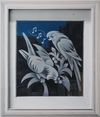
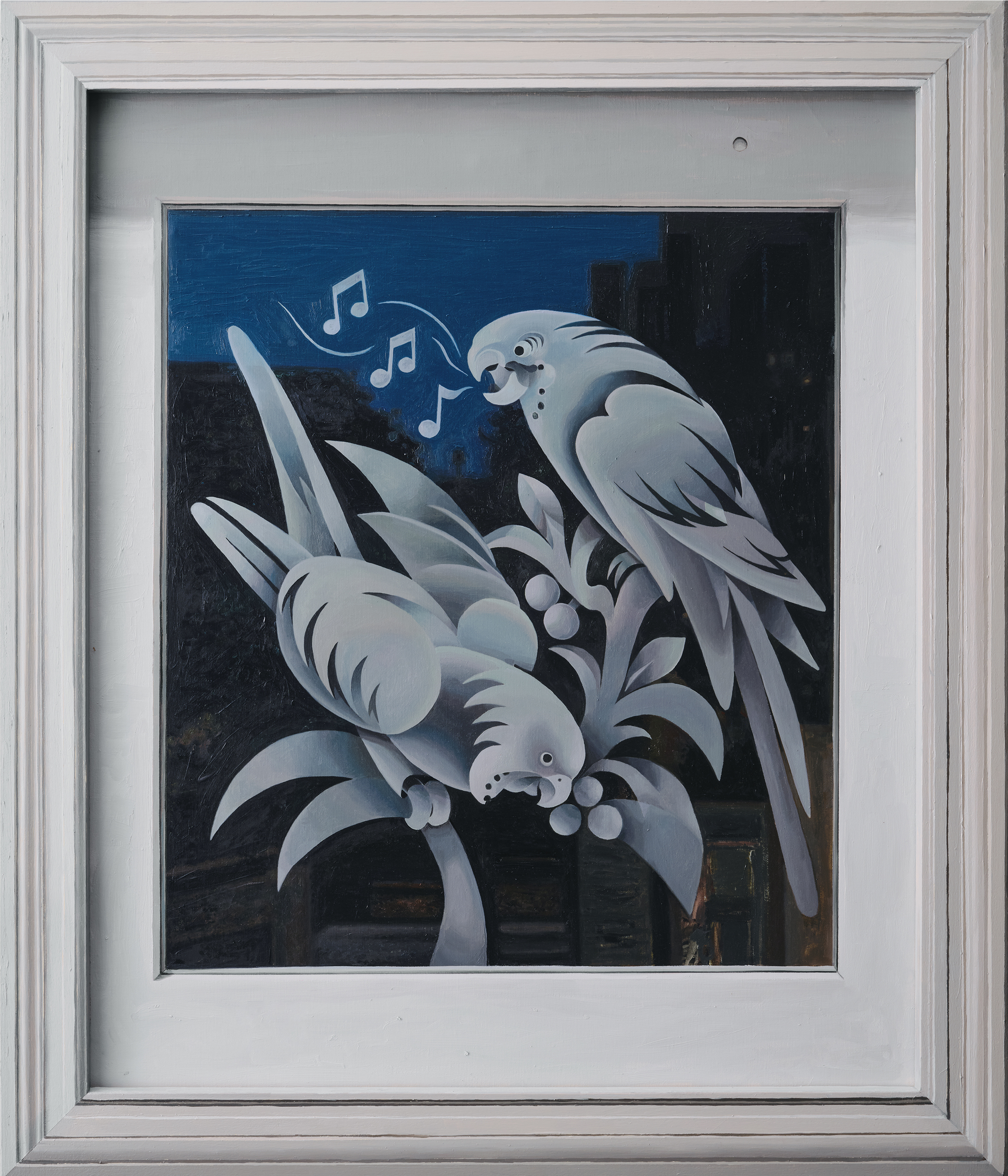
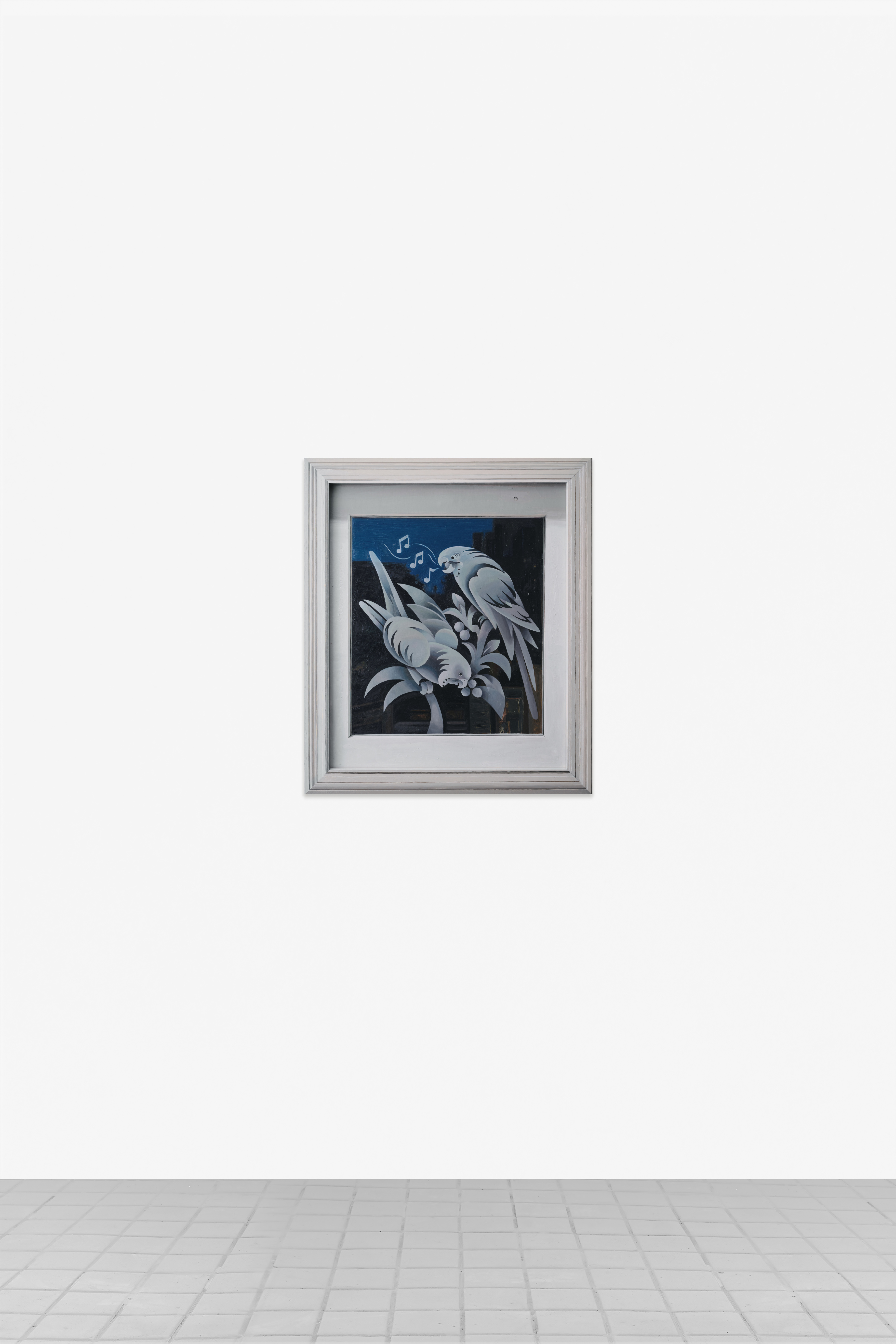
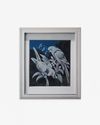
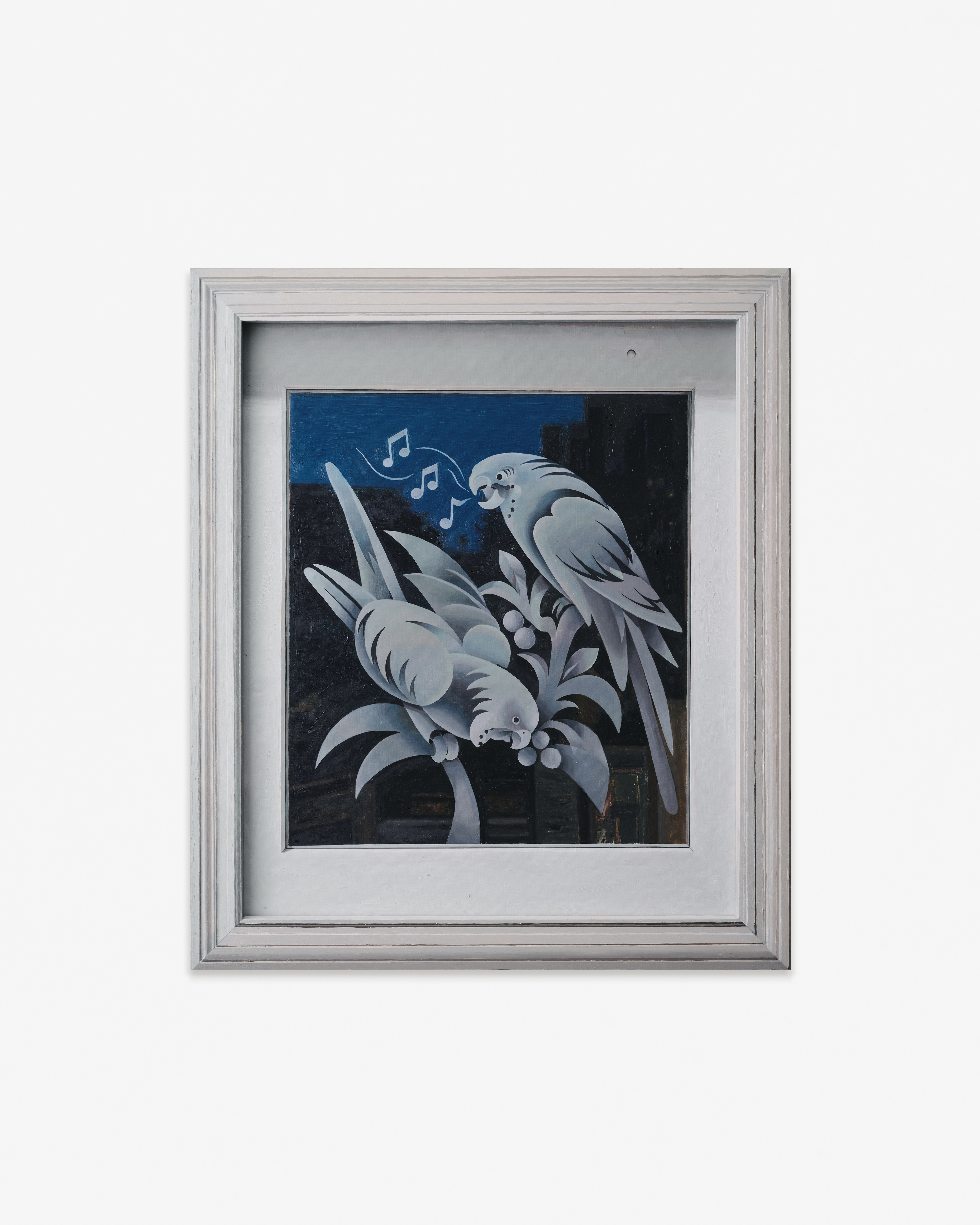
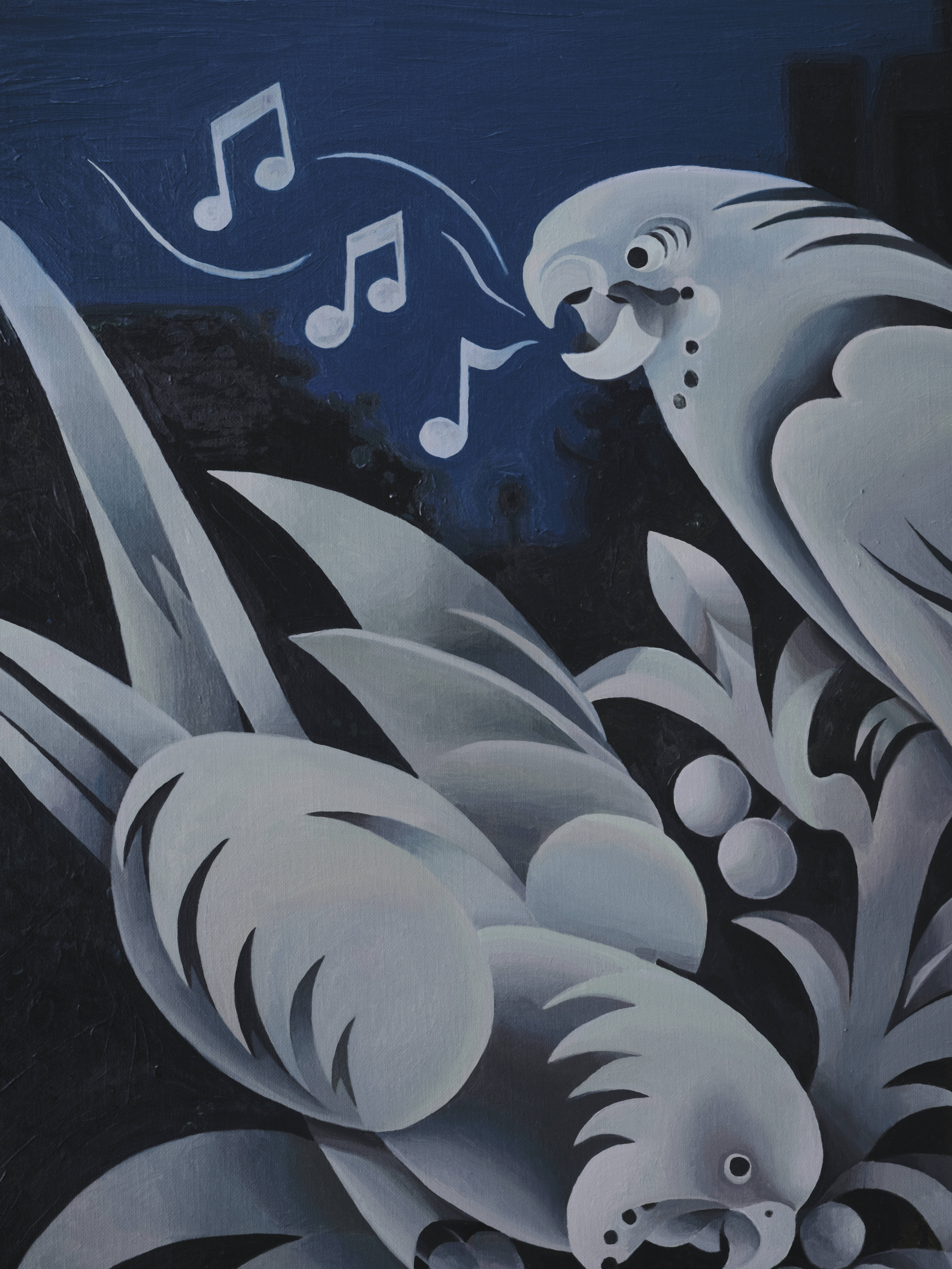
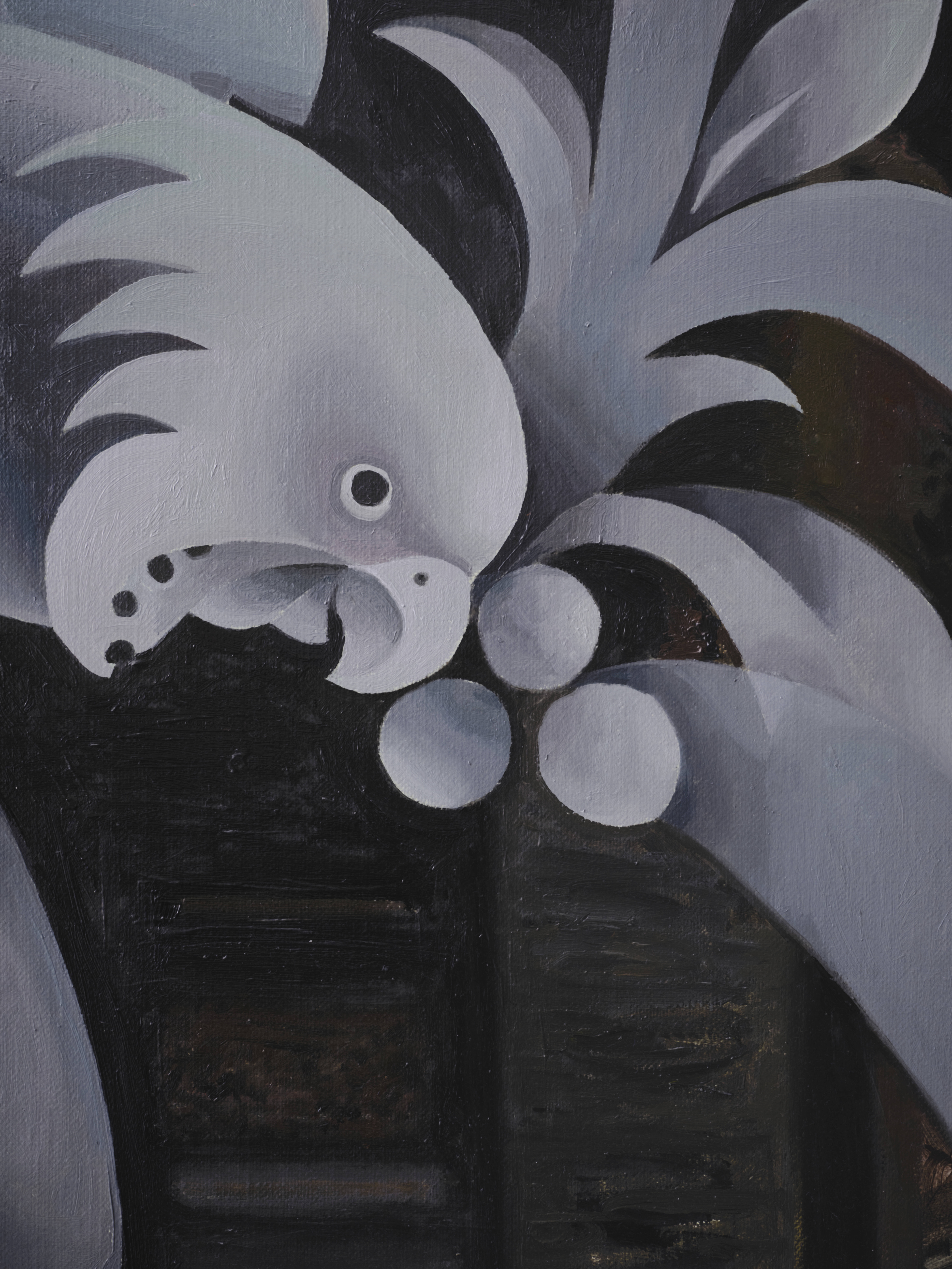
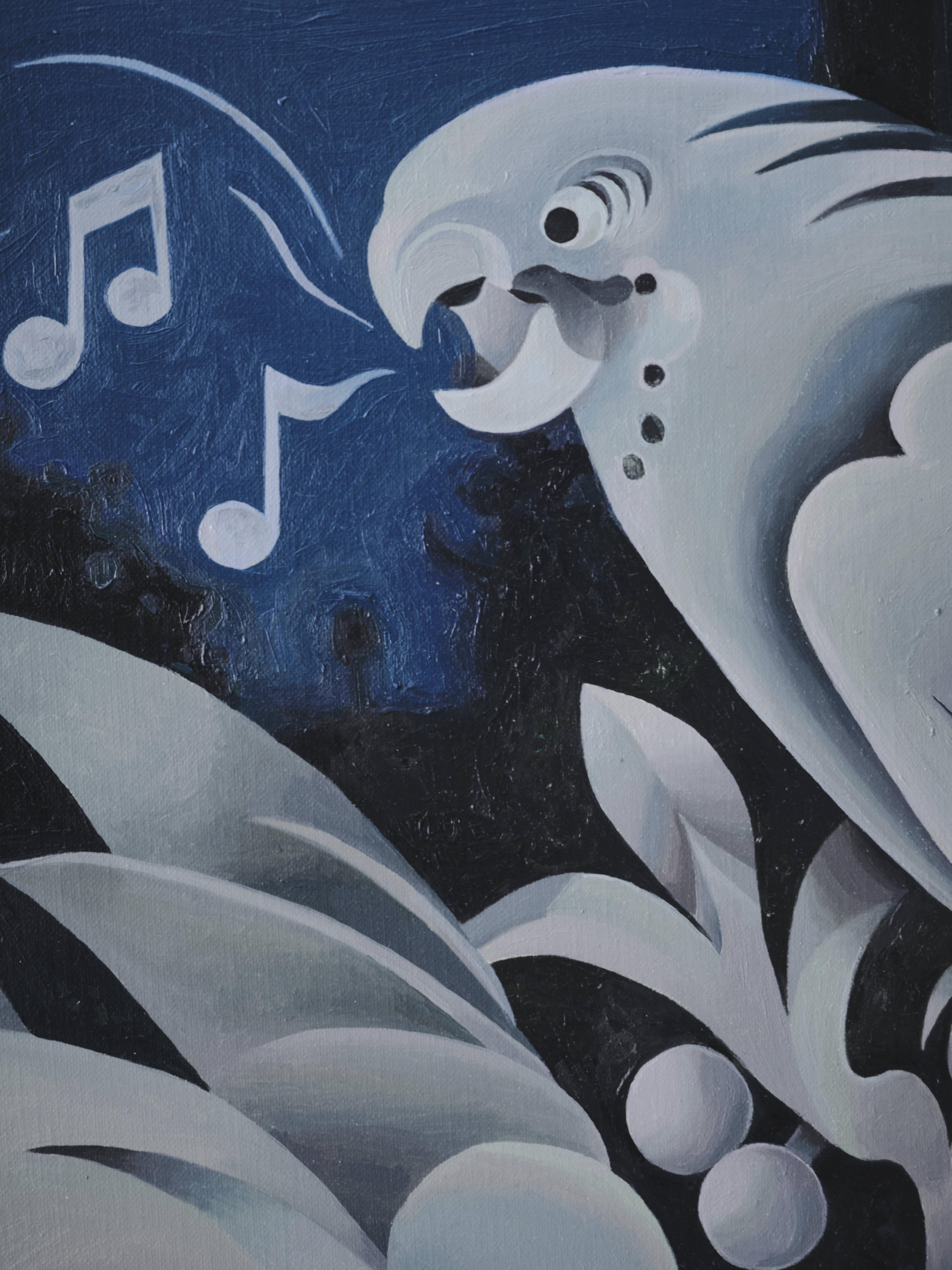
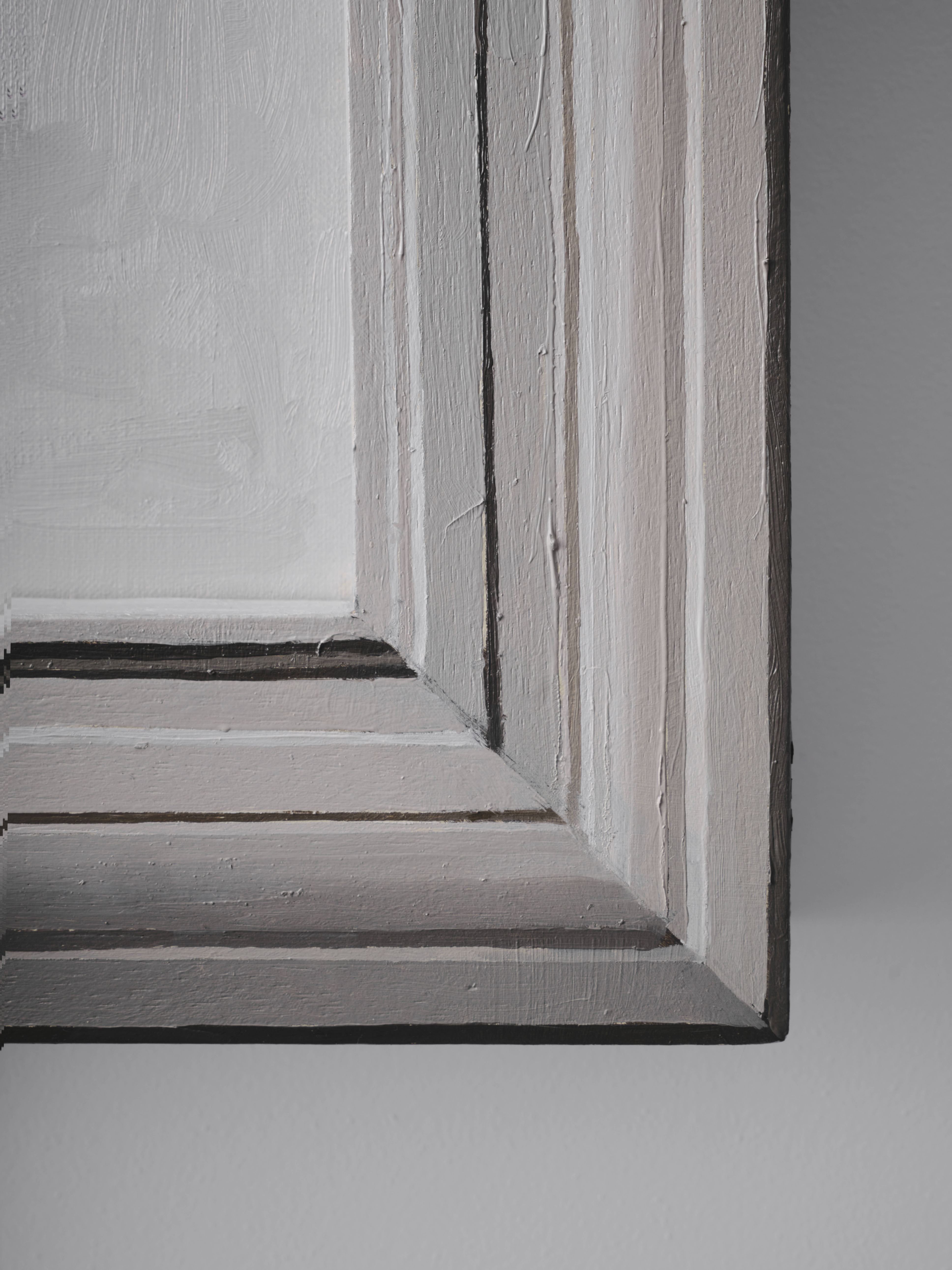
Rooted in the visual and conceptual mechanics of trompe-l'œil, this two-part painting project investigates the passage of time, the malleability of memory, and existential absence through illusory architectural thresholds that playfully subvert human perception. By depicting windows and doors that seem to breach the physical limits of the canvas, the work establishes a deliberate paradox: neither does the window grant genuine access to an exterior world nor does the door open into an adjoining chamber, rendering both apertures physical and conceptual deceptions that permanently suspend the viewer's arrival. This dynamic draws directly on Saint Augustine’s reflections in Book XI of Confessions, which frames the past as memory, the present as immediate attention, and the future as expectation. In the first painting, Uno canta para el otro, two parrots situated within a window embody the tension between these modes of being: the upper bird’s repetitive song functions as an evocative metaphor for memory, an inherently altered, subjective attempt to resurrect what is already gone, while the lower bird anchors itself strictly in the present through the pragmatic, self-sustaining acts of feeding, harvesting, and tending to the immediate moment.