This project is an exploration on the figuration of the sculptures in San Agustín, reinterpreted from my own context. My family migrated from San Agustín, Huila, to Cali in the 1970s, building an improvised house in the Aguablanca district. My relationship with bricks is shaped by the memories of that process of constructing our family's home, where some spaces remained unfinished, a condition referred to as "obra negra", a stage in construction where brick and mortar remain exposed. This material condition made it possible for my mother to satisfy her craving for eating brick shavings during her pregnancy. As for the act of carving brick, it is impossible not to think of the kind of urban landscape that forms around this practice, one often linked to bazuco consumption, and the traces it leaves on walls.
The first time I carved brick to make a sculpture, I was thinking about those same anecdotes. Upon encountering the carved figure, I felt that the nature of that object was connected to the precolonial sculpture of the indigenous peoples from whom my family and I descend.
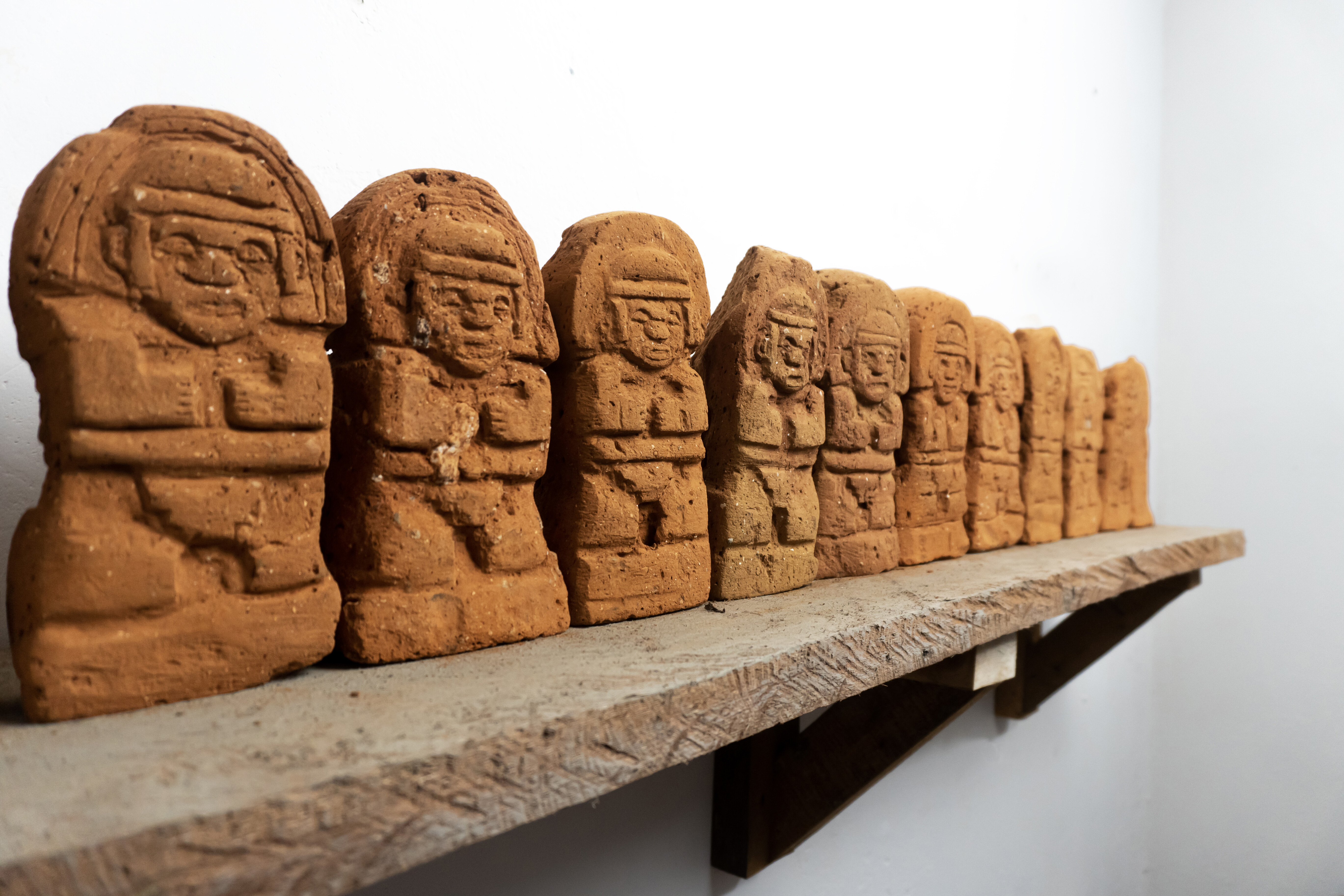
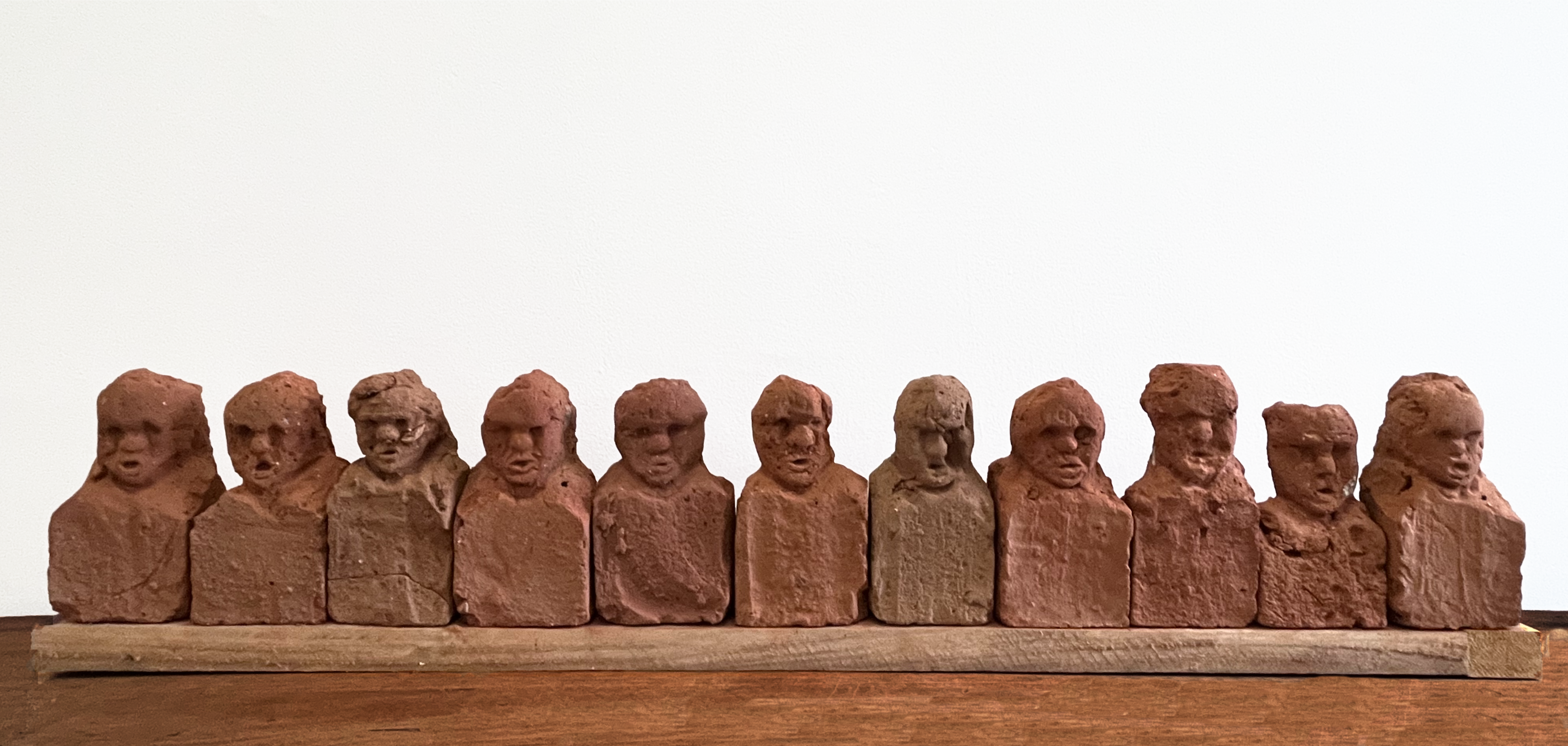
Most of the pieces that make up this project are an attempt to digest those sculptures and that figuration of my ancestors through a common and everyday element in my urban environment: brick. I am interested in reflecting on the processes of erosion of that memory and identity within the urban context to which I belong. This becomes evident in the works: Grandmothers grow younger with each passing century, as a figure inspired by an original sculpture from San Agustín gradually loses form and detail until it becomes a kind of rubble. At the same time, the operation is reversed, and a piece of rubble progressively transforms into a detailed figure.
This work addresses the idea of seriality and the relationship between copy–original or source–reproduction, as a way of considering the difficulties of encountering a truly original identity within a colonial system shaped by processes of whitening that erode the identity discourses of indigenous populations.
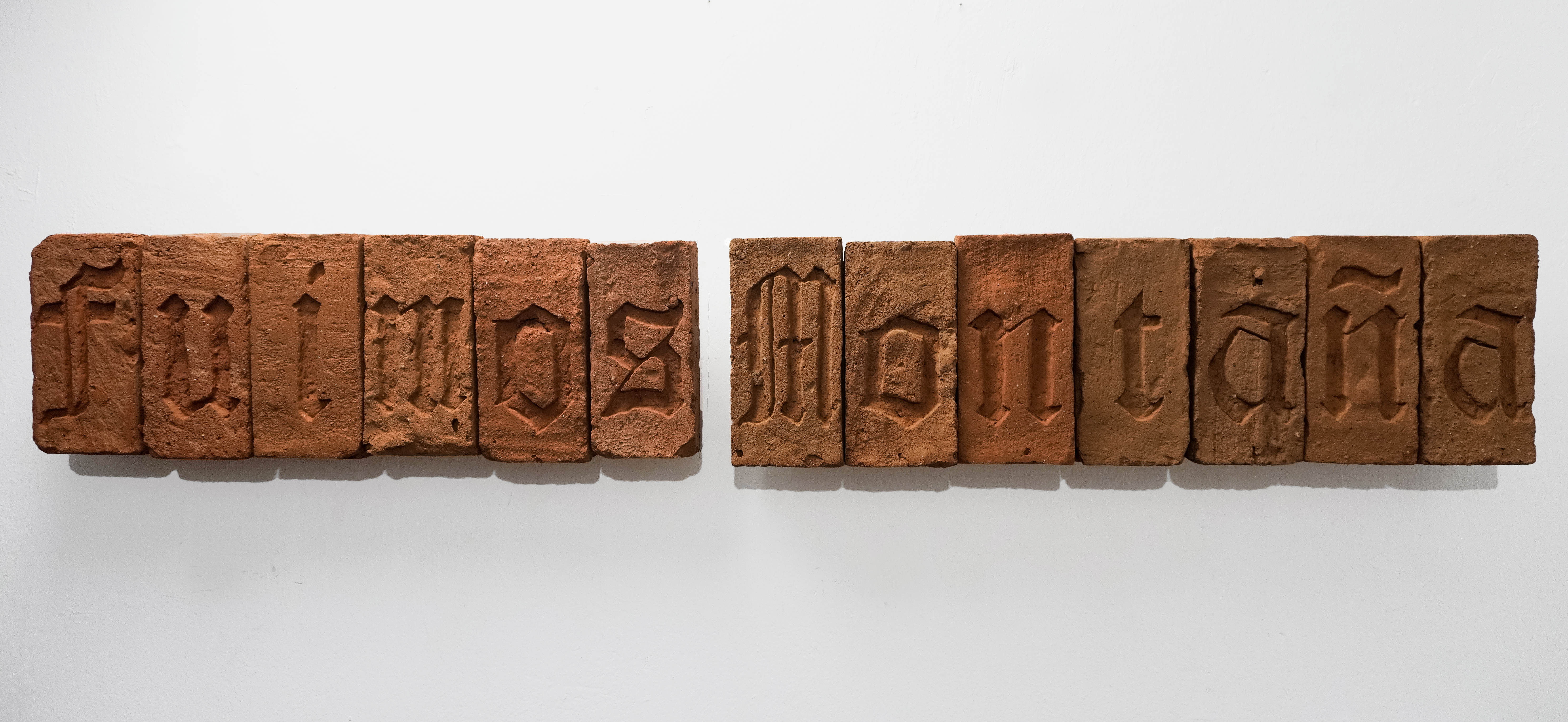
The project also proposes a relationship with modular forms that seek to connect with self-construction, from the idea of a unit that finds its form through grouping and organization to give rise to a body composed of units. These suggest a kind of grammar made up of symbols that repeat and shape a larger unit, aspiring to become a kind of organism or spirit of the neighborhood.


