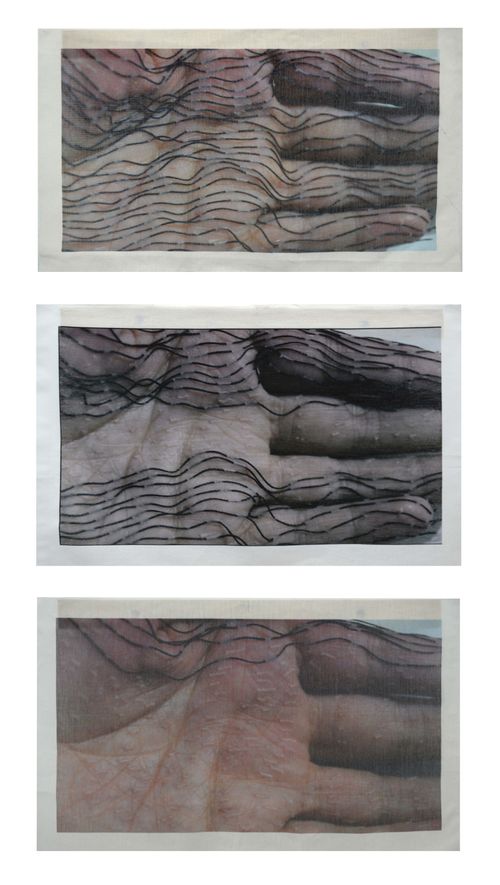
Luz Adriana Vera
Ensayo de sustracción, 2025
Fotografìa. Stills sobre tela
33 × 55 cm (c/u)
Exposición en Espacio El Dorado, Bogotá. 28 de febrero - 25 de abril de 2026
Español
En San Antonio de Palmito aprendí que tejer no es una técnica: es una forma de habitar el territorio. Durante mi viaje a Sucre para realizar acompañamientos en un programa de profesionalización de artistas en 2024, hice parte de procesos artísticos de la comunidad Zenú y entendí que su manera de tejer la caña flecha surge de una relación directa y familiar con el paisaje.
En esta comunidad, el tejido no es una técnica: es memoria y pertenencia. Su fauna y flora son traducidas a patrones de tejido y se vinculan a su construcción familiar. El paisaje se transforma en símbolo y el símbolo en resguardo. Aun después de la violencia vivida en los Montes de María y de los múltiples procesos de colonización, el tejido ha sido una forma de cuidar el territorio y sostener la memoria de las familias.
En ese contexto yo atravesaba una pérdida profunda. Me sentía desarraigada, habitando una soledad que no comprendía. Participar en los procesos artísticos de integrantes de la comunidad y regresar constantemente al territorio me permitió reconocer algo esencial: hago parte de un territorio. El territorio me habita y yo tengo la responsabilidad de resguardarlo.
Fue allí donde comenzó a tomar forma una pregunta: ¿Qué tejido me pertenece? ¿De qué manera puedo resguardar el paisaje del que provengo? No soy hábil tejiendo en el sentido tradicional, y mi formación en la academia de arte me llevó a traducir esa inquietud a la escucha y el crochet, ambos saberes heredados de mi mamá. Empecé a pensar las montañas no como imagen, sino como estructura: capas tectónicas, ondas, frecuencias, vibraciones. El paisaje podía leerse como energía que yo sentía en mi cuerpo y podía abstraerse en sensación.La comprensión sobre mi origen me impulsó a volver a Pamplona, Norte de Santander. Volver implicaba reencontrarme con el frío característico de mi casa, con el dolor corporal que asociaba al desarraigo y con la necesidad de resguardar una memoria a través de un saber heredado: el crochet. Allí inicié caminatas por paisajes atravesados por bajas temperaturas. El frío, el silencio y la duración del recorrido me situaron en estados límite donde el cuerpo debía sostenerse a partir de pequeños gestos. Respirar y mantener el aliento. Llorar como mecanismo de descarga. Concentrarse en el ritmo cuando se teje. Organizar el caos cuando se fieltra con agujas. El cuerpo resiste en acciones mínimas.
Ese movimiento es inseparable del tiempo. Moverse es ocupar lugares distintos en instantes distintos; permanecer inmóvil es ocupar el mismo lugar a lo largo de distintos puntos del tiempo. Lo que más se extraña de un cuerpo vivo es el movimiento. Un cuerpo muerto expresa quietud total. El movimiento señala la vida.
En ese tránsito comprendí que mi tejido no sería la representación del paisaje, sino de su vibración interna. No representaría la montaña; la escucharía. El crochet, repetido con lentitud, comenzó a convertirse en una forma de arraigo. Un gesto mínimo capaz de sostener la memoria. Un modo de habitar el territorio mientras él me habitaba a mí.
Esta exposición piensa el cuerpo en relación con otras formas: el paisaje como su expansión, el tejido como su extensión material, y el sonido como su respiración amplificada. La repetición sostiene esta práctica. Un patrón ejercido una y otra vez logra concretarse en un gran cuerpo.
Si somos tiempo, entonces el cuerpo no solo está en el tiempo: es tiempo materializado. El tiempo nos sucede y, al sucedernos, nos convierte en cuerpo. Un cuerpo laguna. Un cuerpo montaña. Un cuerpo tejido.
English
In San Antonio de Palmito, I learned that weaving is not a technique: it is a way of inhabiting the land. During my trip to Sucre in 2024, where I provided mentorship as part of an artist professionalization program, I took part in artistic processes within the Zenú community and came to understand that their way of weaving with caña flecha emerges from a direct, intimate relationship with the landscape.
In this community, weaving is not a technique: it is memory and belonging. The local flora and fauna are translated into weaving patterns and are intertwined with the community’s family structures. The landscape becomes a symbol, and the symbol becomes a form of protection. Even after the violence experienced in the Montes de María and the multiple processes of colonization, weaving has remained a way of caring for the land and sustaining family memory.
At that time, I was going through a profound loss. I felt uprooted, inhabiting a loneliness I could not understand. Taking part in the artistic processes of community members and returning to the territory repeatedly allowed me to recognize something essential: I am part of a territory. The territory inhabits me, and I have a responsibility to safeguard it.
It was there that a question began to take shape: What kind of weaving belongs to me? How can I safeguard the landscape I come from? I am not skilled at weaving in the traditional sense, and my training at art school led me to translate this concern into listening and crochet, both practices inherited from my mother. I began to think of mountains not as images, but as structures: tectonic layers, waves, frequencies, vibrations. The landscape could be understood as an energy I felt in my body, an energy that could be abstracted into sensation.
My understanding of my origins prompted me to return to Pamplona, Norte de Santander. Returning meant reconnecting with the characteristic cold of my home, with the physical pain I associated with uprootedness, and with the need to safeguard memory through an inherited practice: crochet. There, I began walking through landscapes shaped by low temperatures. The cold, the silence, and the duration of each walk placed me in threshold states in which the body had to sustain itself through small gestures. Breathing and holding my breath. Crying as a means of release. Focusing on rhythm while crocheting. Bringing order to chaos through needle felting. The body endures through minimal actions.
This movement is inseparable from time. To move is to occupy different places at different moments; to remain still is to occupy the same place across different points in time. What we miss most about a living body is its movement. A dead body expresses absolute stillness. Movement signals life.
Through this process, I understood that my weaving would not represent the landscape, but rather its inner vibration. I would not depict the mountain; I would listen to it. Repeated slowly, crochet began to become a form of rootedness. A minimal gesture capable of sustaining memory. A way of inhabiting the territory as it inhabited me.
This exhibition considers the body in relation to other forms: the landscape as its expansion, weaving as its material extension, and sound as its amplified breath. Repetition sustains this practice. A pattern, enacted over and over again, can eventually take shape as a great body.
If we are time, then the body does not simply exist in time: it is time made material. Time unfolds through us and, in doing so, turns us into a body. A lagoon body. A mountain body. A woven body.
Luz Adriana Vera
Ensayo de sustracción, 2025
Fotografìa. Stills sobre tela
33 × 55 cm (c/u)
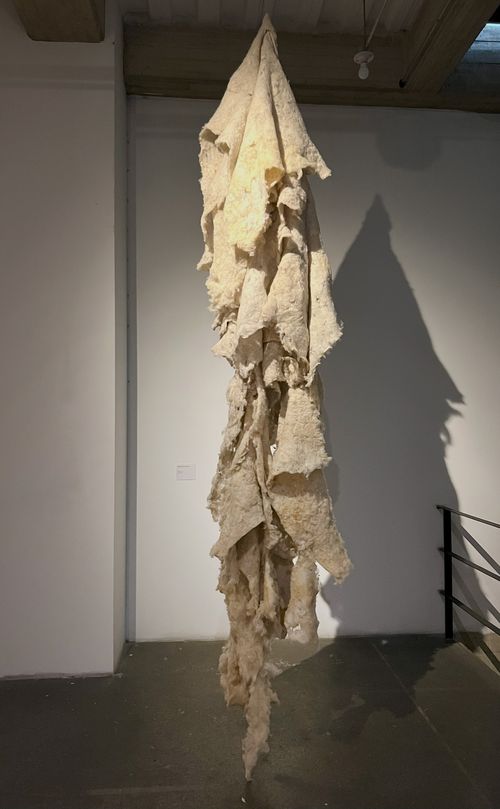
Luz Adriana Vera
Estudio sobre el tiempo 3, 2025
Instalación textil. Needle feltting en lana de oveja
330 × 70 cm
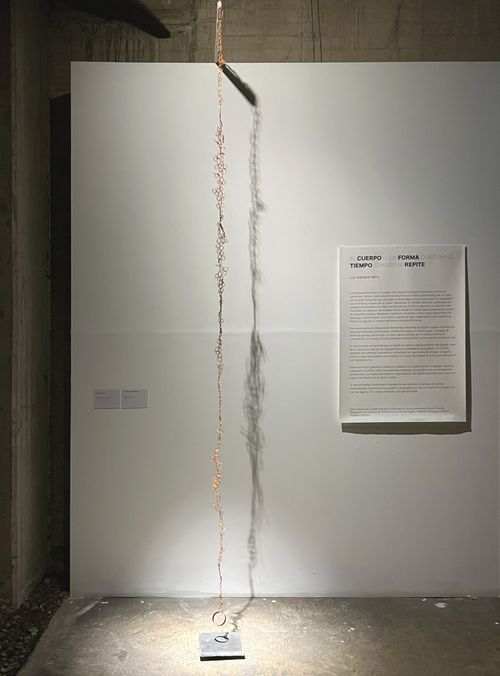
Luz Adriana Vera
Estudio sobre el tiempo 2, 2026
Instalación sonora. Crochet en alambre de cobre y circuito sonoro
440 × 3 cm
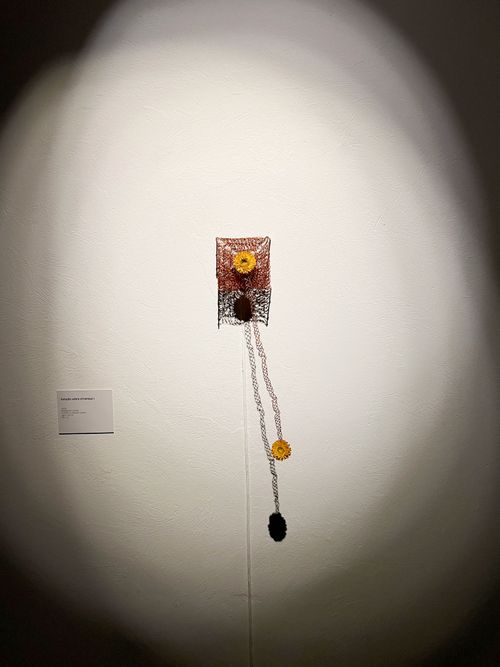
Luz Adriana Vera
Estudio sobre el tiempo 1 , 2026
Instalación sonora. Crochet en alambre de cobre y circuito sonoro
39 × 11.5 × 11.5 cm
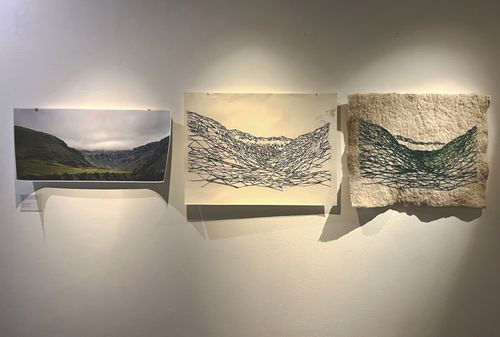
Luz Adriana Vera
Estructura para ser montaña 2, 2026
Serigrafía sobre fieltro, dibujo en carboncillo y fotografía
72 × 95 cm
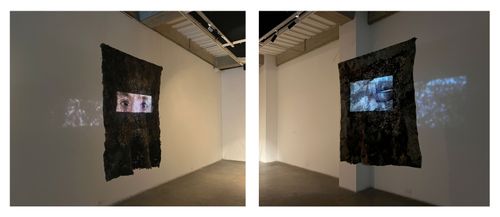
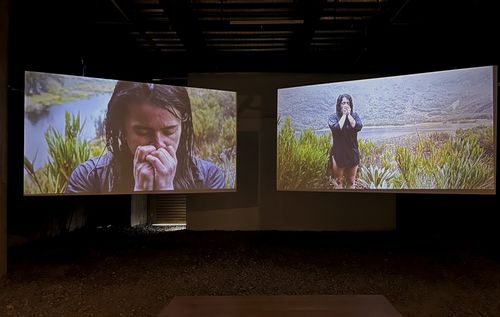
Luz Adriana Vera
Ensayo de sustracción, 2025 - 2026
Instalación. Videoperformance sobre lana de oveja negra en needle feltting
6m 15s
151 × 125 cm ((c/u))
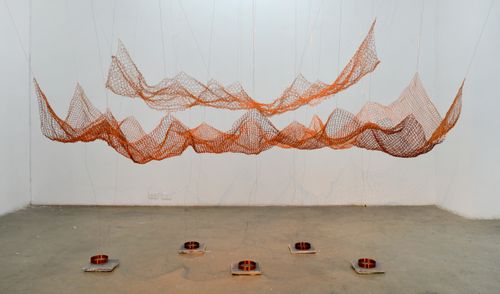
Luz Adriana Vera
Estructura para ser montaña , 2023 - 2025
Instalación. Tejido crochet en alambre de cobre y sonido
Medidas variables
Me interesaEspañol
Todas las obras se encuentran en Bogotá, Colombia, y están disponibles para la venta. Para información sobre precios, disponibilidad y condiciones de envío, escríbanos a hola@espacioeldorado.com
English
All works are located in Bogotá, Colombia, and are available for sale. For information on pricing, availability, and shipping, please write to us at hola@espacioeldorado.com
En breve nos pondremos en contacto con usted. Muchas gracias por su interés