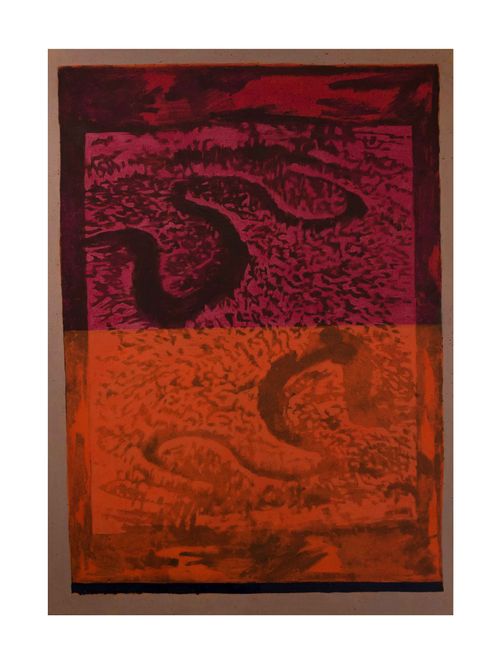
María José Chica
Orinoco/ocorinO, 2024
Pintura. Tierra naturales y óleo sobre linzo
100 × 70 cm
100 × 70 × 2.5 cm (Bastidor)
Exposición en Espacio El Dorado, Bogotá. 24 de agosto - 12 de octubre de 2024
Español
Picurearse: escapar, fugarse, escabullirse, irse, marcharse, retirarse, evadirse, ausentarse, ahuyentarse, desaparecer, largarse, pirarse, evaporarse, abandonar, desertar, emigrar, zafarse, deslizarse. (RAE)
Esta serie de pinturas inspiradas en La Vorágine, y en archivos fotográficos de la época en que fue escrita, no son ilustraciones de un texto: es una lectura compartida.
Las palabras complementan las imágenes. La artista nos dice: abordé cuatro momentos de la ruta que Arturo Cova recorrió huyendo: El llano agreste, que desmitificó su ilusorio mundo burgués con sangre y fuego; el plan ciego de emprender un viaje a ninguna parte; la distorsión que surge de convertir el imaginario de la selva en una experiencia viva apabullante; y el testimonio de su periplo y de las barbaries de la explotación del caucho. Esta exposición es una reflexión sobre escapar sin retorno y sin reservas, a merced de las inclemencias del camino, del encuentro sin filtro, de la rudeza de lo desconocido y del miedo a detenerse.
En unas de las obras se reconocen los elementos de un mapa, de una cartografía. Sin embargo, están totalmente truncados. No permiten explorar, navegar, planificar o administrar.
Estos mapas truncados podrían articular la serie, sólo en la medida en que nos desconciertan, nos desubican y nos dicen que ese todo del que hacen parte, no tiene una intención aclaratoria. Desconcierto de Arturo Cova. Desconcierto colectivo.
Picurearse no es guía de territorio, ni de texto, ni de obra pictórica.
Podría decirse que estas obras representan el ejercicio contrario de la crítica (literaria): No aclara, fija, ni establece un texto, un recorrido, una lectura.
En ninguna de las pinturas hay perspectivas, ni paisajes. Si acaso, motivos a punto de desvanecerse. Violencia de los colores. De la superposición. De la imagen ampliada. El mito desplazando a la anécdota.
El manuscrito de José Eustasio Rivera como imagen. La corteza lacerada del árbol de caucho como texto.
Manigua, mapa, texto, sangre: elementos conocibles que se funden en una idea trágica.
Las imágenes nos confrontan, casi que nos absorben, imposibilitándonos tomar el lugar de observador o de observado. Tal vez sugiriéndonos que, en esta vorágine de nuestra historia, no hay manera de que tomemos la distancia del crítico. Somos acusados y acusadores. Víctimas y victimarios.
English
Picurearse: to escape, flee, slip away, leave, depart, withdraw, evade, absent oneself, run off, disappear, take off, clear out, vanish, abandon, desert, emigrate, break free, slip away. (RAE, Royal Spanish Academy)
This series of paintings, inspired by La Vorágine (The Vortex) and by photographic archives from the period in which it was written, is not an illustration of a text, but a shared reading.
The words complement the images. The artist tells us: “I approached four moments along the route taken by Arturo Cova as he fled: the untamed plains, which shattered his illusory bourgeois world with blood and fire; the blind plan of embarking on a journey to nowhere; the distortion that arises when the imaginary world of the jungle becomes an overwhelming lived experience; and the testimony of his journey and the atrocities of rubber exploitation. This exhibition reflects on fleeing with no possibility of return and no reserves, at the mercy of the harshness of the road, unfiltered encounters, the brutality of the unknown, and the fear of stopping.”
In some of the works, elements of a map or cartography can be recognized. Yet they are completely fragmented. They offer no possibility of exploring, navigating, planning, or managing.
These fragmented maps could serve to connect the series, but only insofar as they disorient us, unsettle our sense of place, and tell us that the whole to which they belong has no clarifying purpose. Arturo Cova’s disorientation. Collective disorientation.
Picurearse is neither a guide to a territory, nor to a text, nor to a body of paintings.
One could say that these works represent the opposite of literary criticism: they neither clarify nor fix nor establish a text, a journey, or a reading.
There are no perspectives or landscapes in any of the paintings. At most, there are motifs on the verge of disappearing. The violence of color. Of superimposition. Of the enlarged image. Myth displacing anecdote.
The manuscript of José Eustasio Rivera as image. The lacerated bark of the rubber tree as text.
Jungle, map, text, blood: recognizable elements merging into a tragic idea.
The images confront us, almost absorbing us, making it impossible to occupy the position of either observer or observed. Perhaps they suggest that, within the vortex of our history, there is no way for us to maintain the distance of the critic. We are both the accused and the accusers. Victims and perpetrators.
María José Chica
Orinoco/ocorinO, 2024
Pintura. Tierra naturales y óleo sobre linzo
100 × 70 cm
100 × 70 × 2.5 cm (Bastidor)
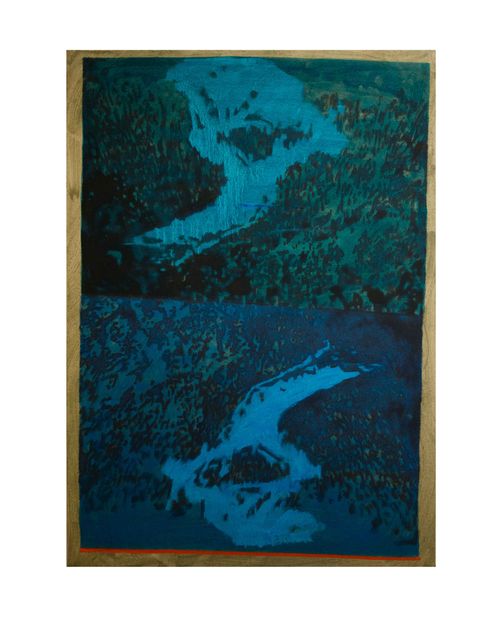
María José Chica
Vaupés/sépuaV, 2024
Pintura. Tierras naturales y óleo sobre lienzo
100 × 70.5 cm
100 × 70.5 × 2.5 cm (Bastidor)
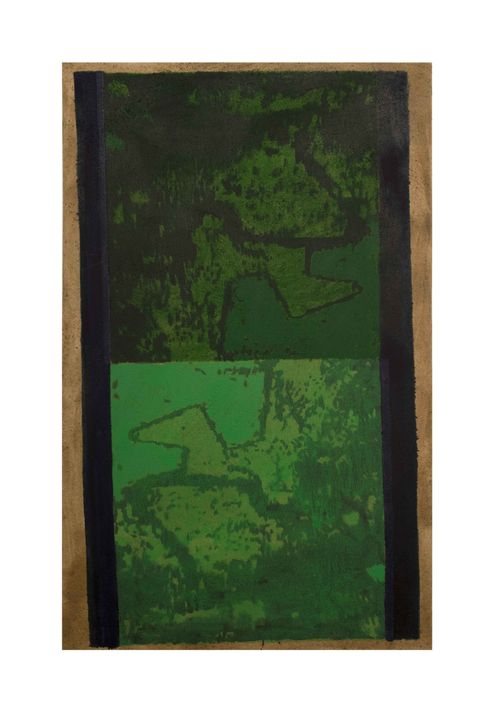
María José Chica
Río Casiquiare/eraiuqisaC, 2024
Pintura. Tierras naturales y óleo sobre lienzo
100 × 60 cm
100 × 60 × 2.5 cm (Bastidor)
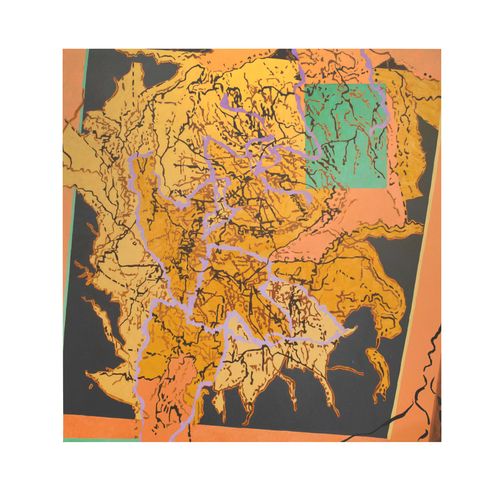
María José Chica
Ruta a ninguna parte II, 2024
Pintura. Tierras naturales y óleo sobre lienzo
165 × 150 cm
165 × 159 × 3 cm (Bastidor)
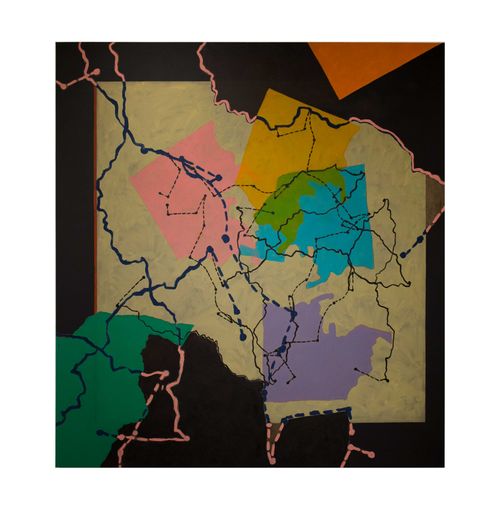
María José Chica
Ruta a ninguna parte I, 2024
Pintura. Tierras naturales y óleo sobre lienzo
170 × 160 cm
170 × 160 × 3 cm (Bastidor)
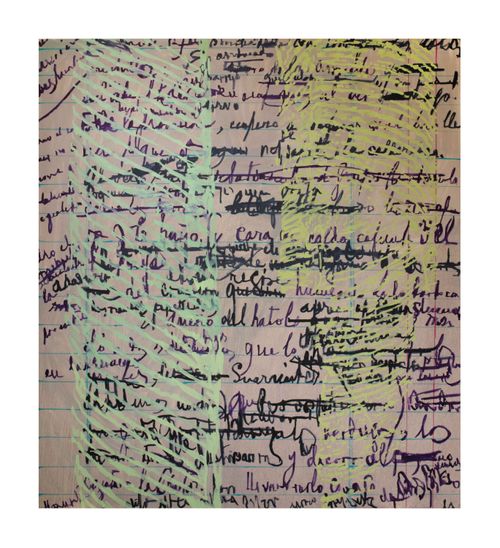
María José Chica
Manuscrito II, 2024
Pintura. Tierras naturales y óleo sobre lienzo
170 × 150 cm
170 × 150 × 3 cm (Bastidor)
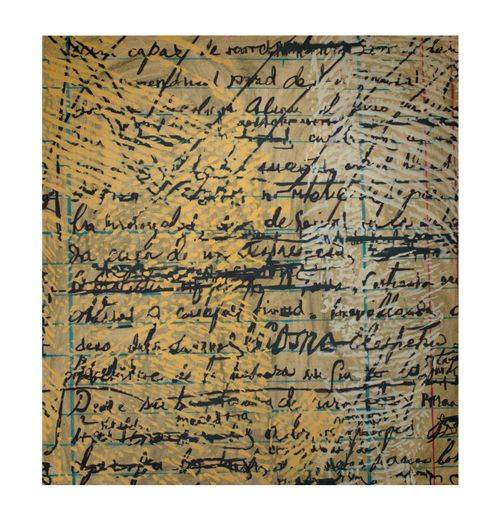
María José Chica
Manuscrito I, 2024
Pintura. Tierras naturales y óleo sobre lienzo
170 × 150 cm
170 × 150 × 3 cm (Bastidor)
Español
Todas las obras se encuentran en Bogotá, Colombia, y están disponibles para la venta. Para información sobre precios, disponibilidad y condiciones de envío, escríbanos a hola@espacioeldorado.com
English
All works are located in Bogotá, Colombia, and are available for sale. For information on pricing, availability, and shipping, please write to us at hola@espacioeldorado.com
En breve nos pondremos en contacto con usted. Muchas gracias por su interés