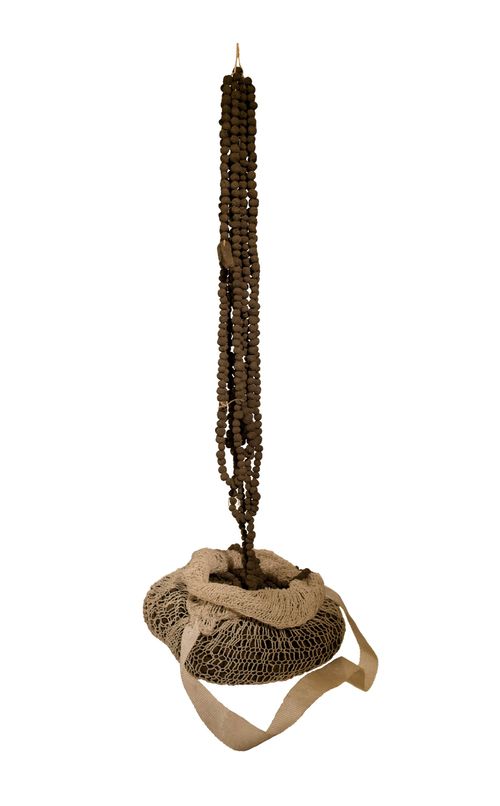
Julieth Morales
Sin título, 2024
Escultura. Barro, cabuya y jigra tejida en fibra de estopa
Medidas variables
Me interesa
Exposición en Espacio El Dorado, Bogotá. 24 de agosto - 12 de octubre de 2024
Español
TODO ACTÚA
Los hábitos son rituales que a fuerza de practicarlos se conciben como algo natural, como elementos impartidos por fuerzas superiores que por su misma presencia se reproducen con resignación. Esos rituales, místicos o mundanos, son los encargados de dar forma a la cotidianidad. Los rituales viven a través de los símbolos. En ocasiones no se sabe sobre sus orígenes, quien los inventó, o quien los echó a andar. Por ello pareciera que los rituales llegan de la nada. Se arraigan en la cultura y se multiplican en la costumbre incluso con dolor. Todo se acepta porque tienen la fuerza de parecer predestinados. Calan tan hondo en los cuerpos que terminan por dominar todos los gestos, comenzando por el acto de callar. Por ello, nada está más lleno de poder y significados que el silencio. Nada es más dominante ni opresor. Comenzar un ritual implica activar un proceso, romperlo todo, liberar los símbolos que oprimen a través de nuevos símbolos: si la tradición está llena de silencio, hay que producir un sonido. Si la tradición está tejida en nudos masculinos, hay que destejer con dedos femeninos. Si no hay cantos para crear la música, o bailes para crear el movimiento, hay que buscarlos entre los símbolos, hasta encontrar una voz. Hay que encontrar los movimientos capaces de doblegar el silencio. Hay que remover los símbolos con otros símbolos, hay que actuar en el lenguaje del ritual. Hay que actuar para encontrar nuevamente la armonía, el hogar sagrado de la sabiduría Misak.
TODO TRANSFORMA
Los tejidos son metáforas de la memoria, al tiempo que el recuerdo solo existe cuando se desglosa entre las líneas de un relato, o de un textil. Por ello, crear textiles es similar al acto de contar historias: hay un hilo conductor, pensamos en la trama de un relato, tejemos un cuento, buscamos su nudo, o concluimos con su desenlace, tocamos las fibras sensibles y tejemos los recuerdos. No en vano textil y texto comparten su etimología, texĕre. Al igual que las manos de los escribas, las manos de las mujeres repiten en las líneas del telar hechos y eventos, mientras sus voces permanecen silenciosas. El tejido visibiliza la memoria, como lo hacen las historias. En el tejer se conserva la ambigüedad de mantener vivos los símbolos de una cultura, así como también los que la vulneran. Ciertos símbolos tradicionales pueden ser en cierta forma una opresión. La mujer Misak debe tejer, la que no lo hace, puede no ser considerada una buena mujer. ¿Cómo liberar desde el tejido? ¿Cómo transformar uno hasta convertirse en el otro? La mano no escapa de otra forma que no sea su lenguaje. ¿Suenan los símbolos? ¿dice algo el silencio? Tejer es repetir, hasta que la repetición logre decir otra cosa. Tejer es murmurar, hasta que el murmullo produzca las palabras.
TODO COMIENZA
Una fe invisible transcurre entre la forma en la que se asumen los hechos de los mitos con la aceptación que tenemos por la obra de arte, hay una complicidad compartida entre el acto de crear, y el acto de creer. Quizás por ello el origen de los mitos, y el mito del arte mismo, sea la creación. La diferencia es que mientras el arte produce obras, el mito produce seres. En la mitología Misak, son seres las mujeres y los hombres, como lo son las plantas, las montañas, el arcoíris, el fuego o las lagunas. Todos tienen un propósito, de todos se puede aprender. ¿Pueden los objetos devenir personas? ¿pueden las creaciones convertirse en vida? En el mundo Misak, los artistas también crean seres: las manos que los modelan, los cuerpos que los usan, el fuego que los oscurece, o las danzas que los acompañan, revisten de presencia su volumen, adquieren ante la comunidad el reconocimiento de su propia existencia. Cuando una mujer Misak es atacada, o silenciada, cuando su abandono y su soledad destruye la armonía, es necesario protegerla desde los símbolos, con el cuidado de un ser que nace. Volver a comenzar. Crear su lenguaje. El artista construye signos que dan sentido a lo incomprensible, crea símbolos para que otros los incorporen en su voz. Rompe el silencio. Una obra de arte puede llegar a ser un hogar para las voces silenciadas.
HISTORIA DEL VESTIDO DE MATRIMONIO DE LA ARMADILLA
La armadilla era sorda a los consejos y no trabajaba, por eso no tenía concha. Desde pequeña, los mayores, tanto padrinos como abuelos y papás, le aconsejaban que tejiera su vestido, pero ella no quería ni arrimarse al telar. Por eso, creció sin ese vestido. Llegó a ser señorita, pero seguía sin hacer su trabajo. Un joven y sus padres la habían estado viendo desde hacía tiempos para pedirla en matrimonio. Hablaron con los papás de la armadilla y entre todos se pusieron de acuerdo para casarla en una semana. Cuando le avisaron que se iba a casar, le tocó comenzar a hilar y después a tejer su vestido. A mediodía le dijeron que el matrimonio era para el otro día; entonces se afanó y para acabar a tiempo tejió más ralo. Por la tarde llegó una compañera y se dió cuenta que el tejido estaba quedando malo, con el tejido muy flojo. Y le dijo que el matrimonio no era al día siguiente, sino que todavía se demoraba una semana. Entonces, como ya no tenía afán, pudo tejer bien el resto del tejido hasta que acabó de terminarlo. Como no había querido aprender desde niña, el vestido le quedó mal hecho, muy disparejo. Y a la hora de la boda no se le veía bien y tuvo que pasar vergüenza.
Recopilación oral de Misael Aranda y Bárbara Muelas. Compilado por Luis Guillermo Vasco.
English
EVERYTHING ACTS
Habits are rituals that, through constant practice, come to be perceived as natural, as elements bestowed by higher powers that reproduce themselves through their very presence, with resignation. These rituals, whether mystical or mundane, are what shape everyday life. Rituals live through symbols. Sometimes, their origins are unknown: who invented them or who set them in motion. For this reason, rituals seem to come out of nowhere. They take root in culture and multiply through custom, even through pain. Everything is accepted because rituals possess the power of seeming predestined. They penetrate the body so deeply that they end up governing every gesture, beginning with the act of remaining silent. For this reason, nothing is more laden with power and meaning than silence. Nothing is more dominant or oppressive.
To begin a ritual is to activate a process, to break everything apart, to liberate oppressive symbols through new ones: if tradition is steeped in silence, a sound must be produced. If tradition is woven into masculine knots, it must be unraveled with feminine fingers. If there are no songs to create music, or dances to create movement, they must be sought among the symbols until a voice is found. Movements capable of bending silence must be discovered. Symbols must be displaced by other symbols; one must act in the language of ritual. One must act to find harmony once again, the sacred home of Misak wisdom.
EVERYTHING TRANSFORMS
Textiles are metaphors for memory, just as memory exists only when it is unfolded through the lines of a story or a piece of fabric. Creating textiles is therefore akin to telling stories: there is a guiding thread; we think about the plot of a narrative, weave a tale, search for its knot, or bring it to a conclusion. We touch sensitive fibers and weave memories. It is no coincidence that textile and text share the same etymological root, texĕre, meaning “to weave.”
Like the hands of scribes, women's hands repeat facts and events along the lines of the loom, while their voices remain silent. Weaving makes memory visible, just as stories do. In weaving, there remains an ambiguity: the practice preserves the symbols of a culture, but also those that make it vulnerable. Certain traditional symbols can, in some ways, become instruments of oppression. A Misak woman must weave; one who does not may not be considered a good woman.
How can weaving become a means of liberation? How can one transform oneself into the other? The hand can only escape through its own language. Do symbols make sounds? Does silence say anything? To weave is to repeat until repetition manages to say something else. To weave is to murmur until the murmur gives rise to words.
EVERYTHING BEGINS
An invisible faith runs through the way we accept the events of myths and the way we embrace a work of art. There is a shared complicity between the act of creating and the act of believing. Perhaps this is why the origin of myths, and the myth of art itself, lies in creation. The difference is that while art produces works, myth produces beings.
In Misak mythology, women and men are beings, just as plants, mountains, rainbows, fire, and lagoons are beings. Each has a purpose, and each has something to teach us. Can objects become people? Can creations become life?
In the Misak world, artists also create beings: the hands that shape them, the bodies that use them, the fire that darkens them, and the dances that accompany them all endow their volume with presence, granting them recognition of their own existence within the community.
When a Misak woman is attacked or silenced, when abandonment and loneliness destroy harmony, she must be protected through symbols, with the care one would give to a being just born. To begin again. To create her language.
The artist constructs signs that give meaning to the incomprehensible, creating symbols for others to incorporate into their own voices. The artist breaks the silence. A work of art can become a home for silenced voices.
THE STORY OF THE ARMADILLO'S WEDDING DRESS
The armadillo would not listen to advice and did not work, which is why she had no shell. From the time she was little, her elders—her godparents, grandparents, and parents alike—advised her to weave her dress, but she did not even want to go near the loom. And so she grew up without that dress.
She reached young womanhood but still refused to do her work. A young man and his parents had been watching her for some time, intending to ask for her hand in marriage. They spoke with the armadillo's parents, and together they agreed that she would marry in a week's time.
When she was told that she was going to be married, she had to begin spinning the thread and then weaving her dress. At noon, they told her that the wedding would take place the following day. She panicked and, to finish in time, wove the fabric more loosely.
That afternoon, a female companion came by and noticed that the weaving was turning out badly, with the fabric far too loose. She told her that the wedding was not the next day after all, but that there was still a week to go.
Since she was no longer in a hurry, the armadillo was able to weave the rest of the fabric properly until she had finished the dress. Because she had refused to learn when she was little, the dress turned out poorly made and very uneven. When the time came for the wedding, it looked terrible on her, and she was left feeling ashamed.
Oral account collected by Misael Aranda and Bárbara Muelas. Compiled by Luis Guillermo Vasco.
Julieth Morales
Sin título, 2024
Escultura. Barro, cabuya y jigra tejida en fibra de estopa
Medidas variables
Me interesa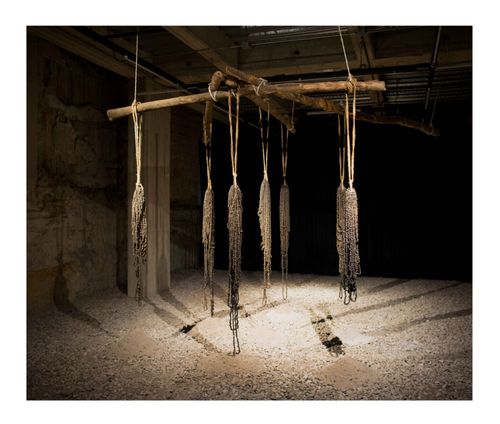
Julieth Morales
Sin título, 2024
Instalación. Barro ahumado en la tulpa de UAIIN, ceniza de los fogones Nakchak Misak, lazos y varas de Palo de moco
Medidas variables
Me interesa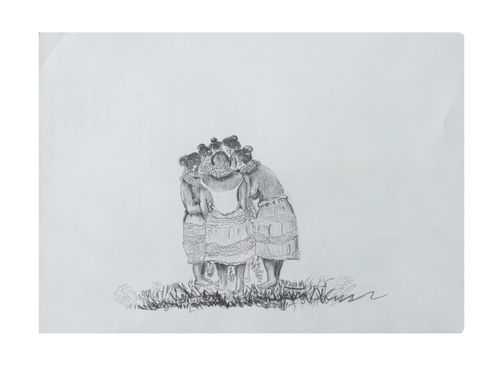
Julieth Morales
Sin título, 2024
Dibujo. Lápiz sobre papel
24 × 34 cm (sin marco)
36 × 45.5 × 3 cm (con marco)
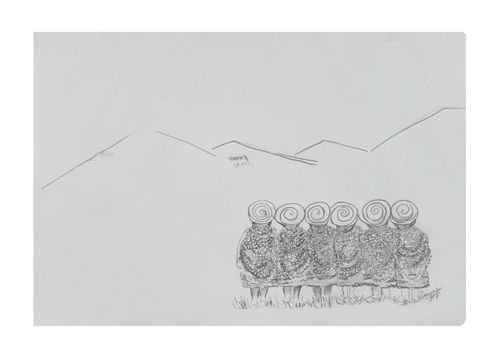
Julieth Morales
Sin título, 2024
Dibujo. Lápiz sobre papel
24 × 34 cm (sin marco)
36 × 45.5 × 3 cm (con marco)
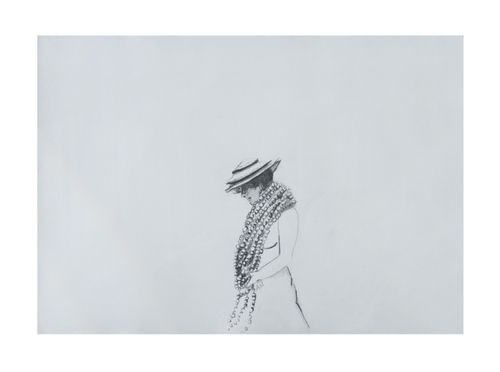
Julieth Morales
Sin título, 2024
Dibujo. Lápiz sobre papel
24 × 34 cm (sin marco)
36 × 45.5 × 3 cm (con marco)

Julieth Morales
Sin título, 2024
Video a doble canal: https://youtu.be/FLw63574Do8
12m 21s
Me interesa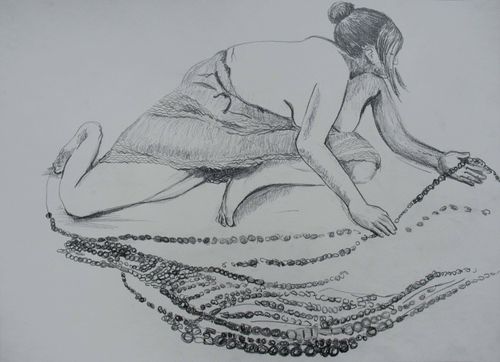
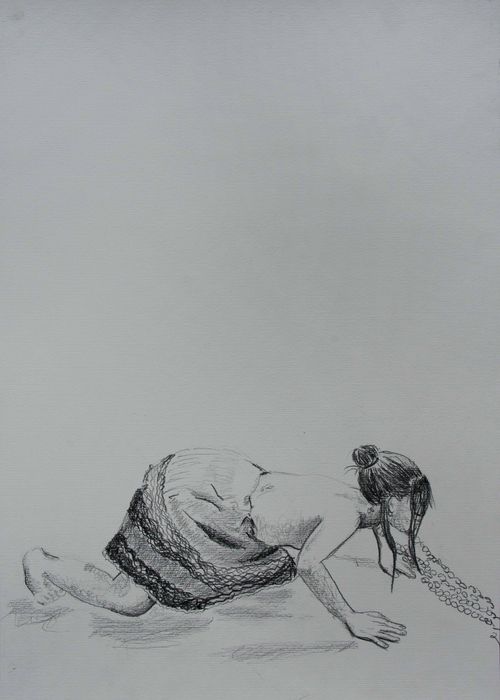
Julieth Morales
Sin título, 2024
Dibujo. Lápiz sobre papel
58 × 42 cm (sin marco)
69.3 × 53.2 × 3 cm (con marco)
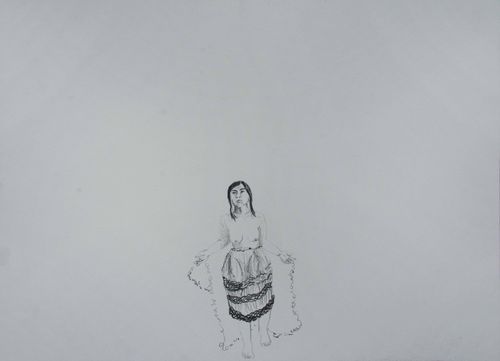
Julieth Morales
Sin título, 2024
Dibujo. Lápiz sobre papel
42 × 58 cm (sin marco)
53.2 × 69.3 × 3 cm (con marco)
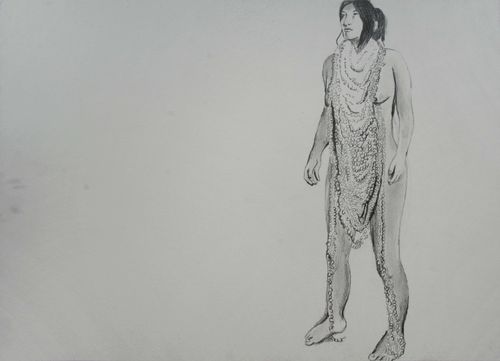
Julieth Morales
Sin título, 2024
Dibujo. Lápiz sobre papel
42 × 58 cm (sin marco)
53.2 × 69.3 × 3 cm (con marco)
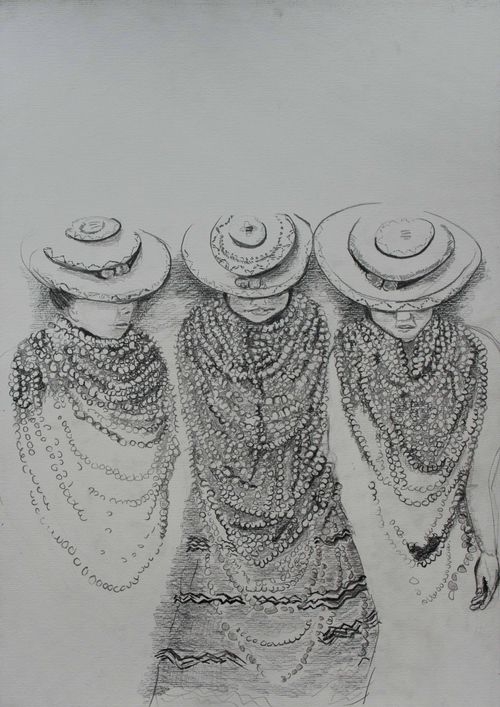
Julieth Morales
Sin título, 2024
Dibujo. Lápiz sobre papel
58 × 42 cm (sin marco)
69.3 × 53.2 × 3 cm (con marco)
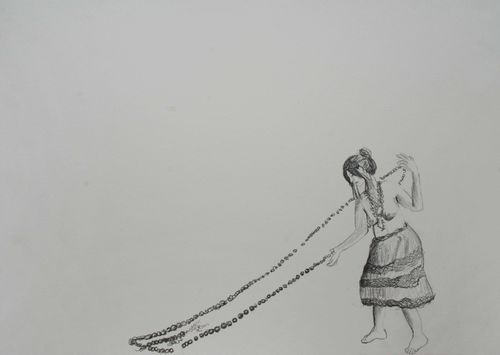
Julieth Morales
Sin título, 2024
Dibujo. Lápiz sobre papel
42 × 58 cm (sin marco)
53.3 × 69.3 × 3 cm (con marco)
Español
Todas las obras se encuentran en Bogotá, Colombia, y están disponibles para la venta. Para información sobre precios, disponibilidad y condiciones de envío, escríbanos a hola@espacioeldorado.com
English
All works are located in Bogotá, Colombia, and are available for sale. For information on pricing, availability, and shipping, please write to us at hola@espacioeldorado.com
En breve nos pondremos en contacto con usted. Muchas gracias por su interés