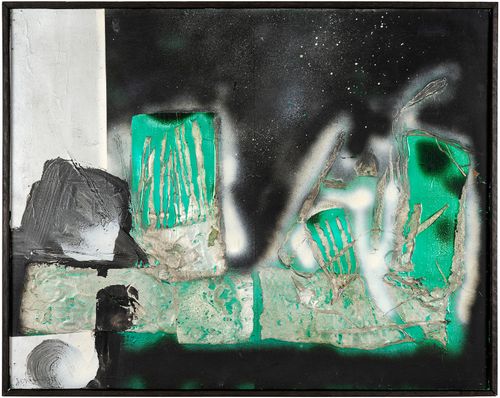
Jonier Marín
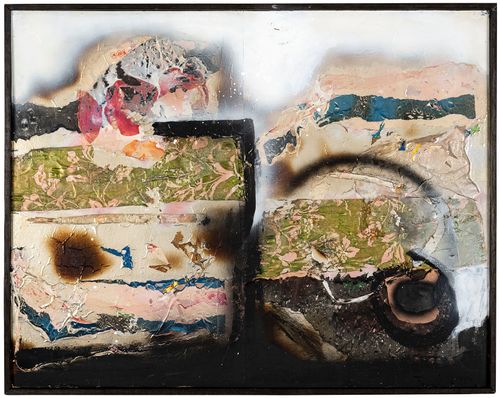
SONETO XLV ME BORRARA LA NOCHE, 1972-1974
Plasticollage. Aluminio, plástico, acrílico y fuego sobre hardboard (tablero aglutinado)
68 × 86.5 cm

Exposición en Espacio El Dorado, Bogotá. 16 de marzo - 04 de mayo de 2024
Español
En mayo de 1981, basado en algunos de los sonetos del famoso poemario Tierra de Promisión (1921), un joven y todavía desconocido Jonier Marín presentó en la Biblioteca Luis Ángel Arango de Bogotá, un conjunto de veinte pinturas en “plasticollage”, creadas entre 1972 y 1974 en Zúrich. Concebidas como un homenaje a José Eustasio Rivera, quien, según Marín, “con bastante antelación a las preocupaciones ecológicas del mundo actual, describió poética y objetivamente en Tierra de Promisión la naturaleza y el hombre de la selva tropical americana”. Las pinturas quedaron en gran parte olvidadas hasta que Espacio El Dorado las redescubrió hace unos años y las presenta ahora, después de más de 35 años, a propósito de los cien años de la publicación de La Vorágine (1924).
Al presentar diecinueve de las veinte pinturas originales–una se perdió irremediablemente—al mismo tiempo que las posteriores series Amazonia Report (1976), Projeto São Paulo (1976) y Manos y Pies (1977), Prótesis Románticas dirige nuestra mirada hacia cuáles fueron los poemas que Marín elige pintar (20 de un total de 55) y a las micro-decisiones que toma para sugerir que, a través de su creación, Marín desarrollará un estilo que luego perfeccionaría en su obra futura y que le prepararía para afrontar la naturaleza irreductible de la selva colombiana.
Confrontado con la inmensidad e intensidad de los sonetos de Rivera -quien estaba movido por un interés en aprehender y retratar la cuenca del río Magdalena, desplegando textualmente una vocación paisajística genuina- Marín opta, más bien, por centrarse en objetos, animales o entidades discretas para colorearlos o recrearlos intensamente, prefiriendo poner en primer plano una parte de la misma para iluminar el todo. Así, su estilo, a diferencia del estilo expansivo y comprehensivo de Rivera, se centrará en aspectos específicos de la fauna y flora del territorio, resaltando e iluminando detalles del mismo, técnica que luego refinará -como vemos en el Amazonia Report (1976)- unos años después cuando se confronte con la vastedad de la selva amazónica. En otras palabras, y tal como su título lo indica, Prótesis Románticas propone que, al homenajear a Rivera, Marín aprende a abandonar el ejercicio del paisajismo –en tanto siempre supone la aprehensión y ordenamiento de un todo un territorio- y que esto a su vez, paradójica, coincidentemente, logra prepararlo para la imposibilidad e inmensidad de la selva amazónica. Solo abandonando el paisaje, Marín fue capaz de capturar y transmitirnos -al igual que Rivera en La Vorágine- la sublime imposibilidad del territorio amazónico.
Texto de José Luis Falconi
English
In May 1981, drawing on several sonnets from the celebrated poetry collection Tierra de Promisión (1921), a young and still-unknown Jonier Marín presented a series of twenty “plasticollage” paintings at the Luis Ángel Arango Library in Bogotá. Created between 1972 and 1974 in Zurich, the works were conceived as a tribute to José Eustasio Rivera, who, according to Marín, “well ahead of the contemporary world’s ecological concerns, poetically and objectively described the nature and inhabitants of the American tropical rainforest in Tierra de Promisión.” The paintings remained largely forgotten until Espacio El Dorado rediscovered them a few years ago. Now, more than 35 years later, the gallery presents them once again to mark the centenary of the publication of La Vorágine (1924).
By presenting nineteen of the twenty original paintings—one has been irretrievably lost—alongside the later series Amazonia Report (1976), Projeto São Paulo (1976), and Manos y Pies (1977), Romantic Prostheses directs our attention to the poems Marín chose to paint (20 out of a total of 55) and to the small decisions he made in the process. These choices suggest that, through this body of work, Marín developed a style that he would later refine in his subsequent practice, preparing him to confront the irreducible nature of the Colombian jungle.
Faced with the immensity and intensity of Rivera’s sonnets—written out of a desire to apprehend and portray the Magdalena River basin, expressing a genuine landscape-oriented sensibility through the written word—Marín instead chooses to focus on individual objects, animals, or distinct entities, coloring or recreating them with intensity. He brings a particular detail to the foreground in order to illuminate the whole. Thus, unlike Rivera’s expansive and comprehensive style, Marín’s approach centers on specific aspects of the region’s fauna and flora, highlighting and illuminating their details. He would later refine this technique, as seen in Amazonia Report (1976), a few years afterward, when confronted with the vastness of the Amazon rainforest.
In other words, as its title suggests, Romantic Prostheses proposes that, through his tribute to Rivera, Marín learns to abandon landscape painting as a practice—which invariably entails apprehending and ordering an entire territory—and that this, paradoxically and coincidentally, prepares him to confront the impossibility and immensity of the Amazon rainforest. Only by abandoning the landscape did Marín become capable of capturing and conveying to us—as Rivera did in La Vorágine—the sublime impossibility of the Amazonian territory.
Text by José Luis Falconi
Jonier Marín
SONETO XLV ME BORRARA LA NOCHE, 1972-1974
Plasticollage. Aluminio, plástico, acrílico y fuego sobre hardboard (tablero aglutinado)
68 × 86.5 cm
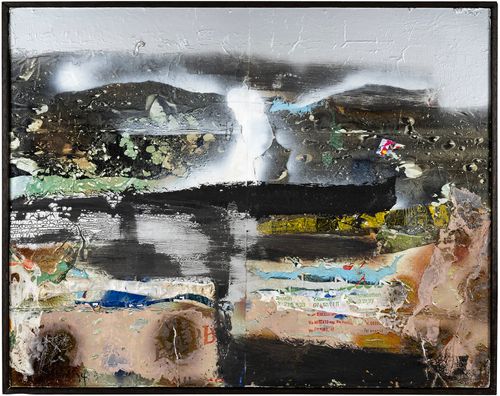
Jonier Marín
SONETO XXXIX HAY UN AGUA SOLITARIA, 1972-1974
Plasticollage. Aluminio, plástico, acrílico y fuego sobre hardboard (tablero aglutinado)
68 × 86.5 cm
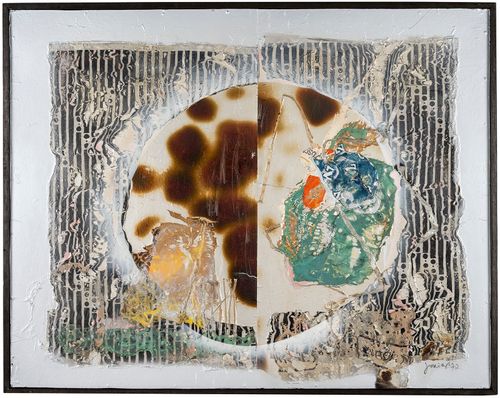
Jonier Marín
SONETO XXXVII EL ESCARABAJO ESMERALDINO, 1972-1974
Plasticollage. Aluminio, plástico, acrílico y fuego sobre hardboard (tablero aglutinado)
68 × 86.5 cm
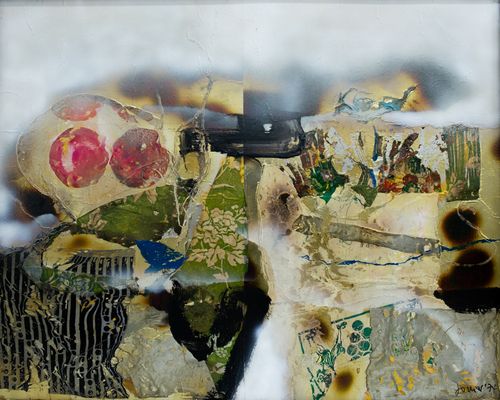
Jonier Marín
SONETO XXV SOLES SILENTES, 1972-1974
Plasticollage. Aluminio, plástico, acrílico y fuego sobre hardboard (tablero aglutinado)
68 × 86.5 cm
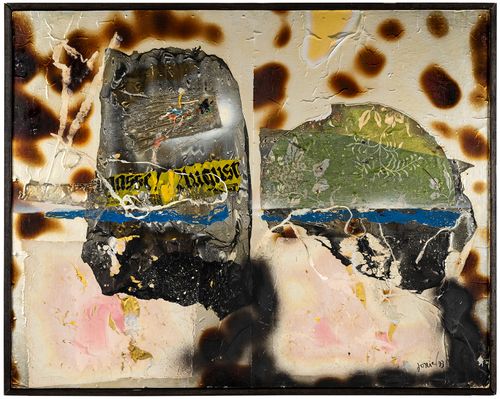
Jonier Marín
SONETO XXIII LA PALOMA TORCAZ, 1972-1974
Plasticollage. Aluminio, plástico, acrílico y fuego sobre hardboard (tablero aglutinado)
68 × 86.5 cm
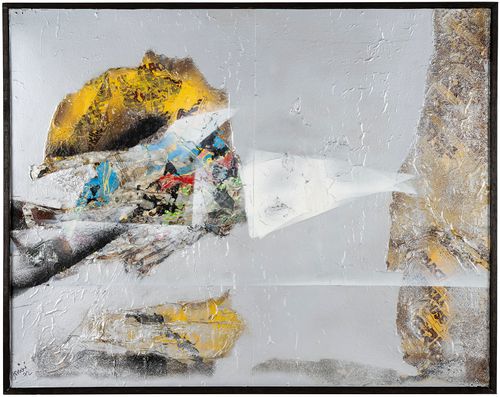
Jonier Marín
SONETO XIX EL CONDOR, 1972-1974
Plasticollage. Aluminio, plástico, acrílico y fuego sobre hardboard (tablero aglutinado)
68 × 86.5 cm
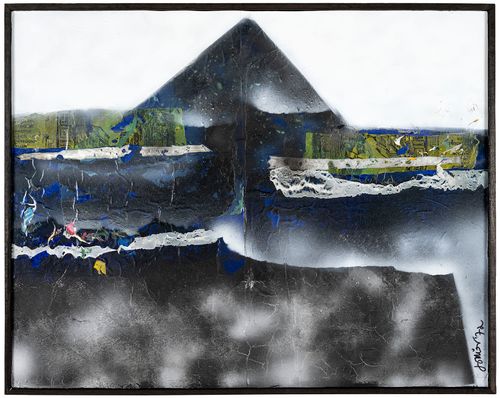
Jonier Marín
SONETO XVIII EL FARALLÓN, 1972-1974
Plasticollage. Aluminio, plástico, acrílico y fuego sobre hardboard (tablero aglutinado)
68 × 86.5 cm
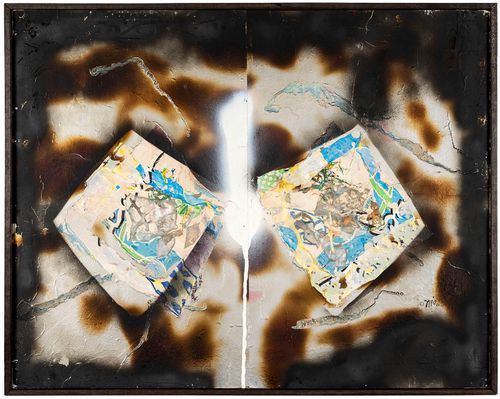
Jonier Marín
SONETO XIII LA MARIPOSA, 1972-1974
Plasticollage. Aluminio, plástico, acrílico y fuego sobre hardboard (tablero aglutinado)
68 × 86.5 cm
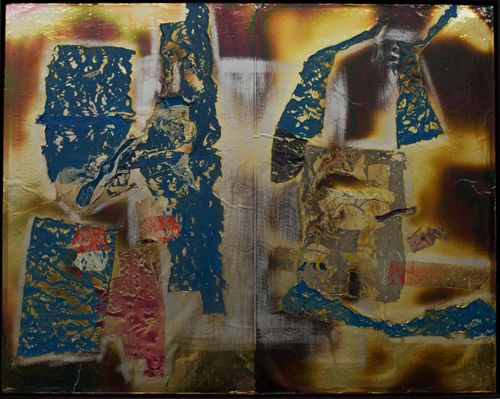
Jonier Marín
SONETO II EL PAISAJE NOCTURNO, 1972-1974
Plasticollage. Aluminio, plástico, acrílico y fuego sobre hardboard (tablero aglutinado)
68 × 86.5 cm
Español
Todas las obras se encuentran en Bogotá, Colombia, y están disponibles para la venta. Para información sobre precios, disponibilidad y condiciones de envío, escríbanos a hola@espacioeldorado.com
English
All works are located in Bogotá, Colombia, and are available for sale. For information on pricing, availability, and shipping, please write to us at hola@espacioeldorado.com
En breve nos pondremos en contacto con usted. Muchas gracias por su interés